Key takeaways
- A realistic Lake Atitlan day tour covers two or three villages by boat, not all twelve, so plan around San Juan, San Pedro and Santiago.
- Budget roughly 45 to 90 minutes per village stop and 20 to 30 minutes for each boat crossing between them.
- Pairing a boat ride with a weaving cooperative in San Juan La Laguna or a market day gives the richest single-day experience.
- Lake Atitlan sits at 1,562 meters and is the deepest lake in Central America, so mornings are calm and afternoons get windy.
- A guided day tour with local Maya guides handles lancha timing, introductions and language, which is hard to coordinate solo in one day.
You can comfortably see two or three villages, a weaving cooperative and the big volcano viewpoints on a single Lake Atitlan day tour, as long as you start early and travel by boat. Trying to circle the whole lake in a day is the one mistake that turns a beautiful trip into a rushed one, so this guide maps a realistic route instead.
We are a team of Maya guides who live around the lake, and the itinerary below is the one we actually run. It is built around the morning calm, the afternoon wind and the short lancha crossings that connect the villages. Along the way we point out how long to spend in each place, where a market or a backstrap loom is worth your time, and why a few hours with a local guide opens doors that a self-guided visitor rarely finds.
First, the shape of the lake you are visiting
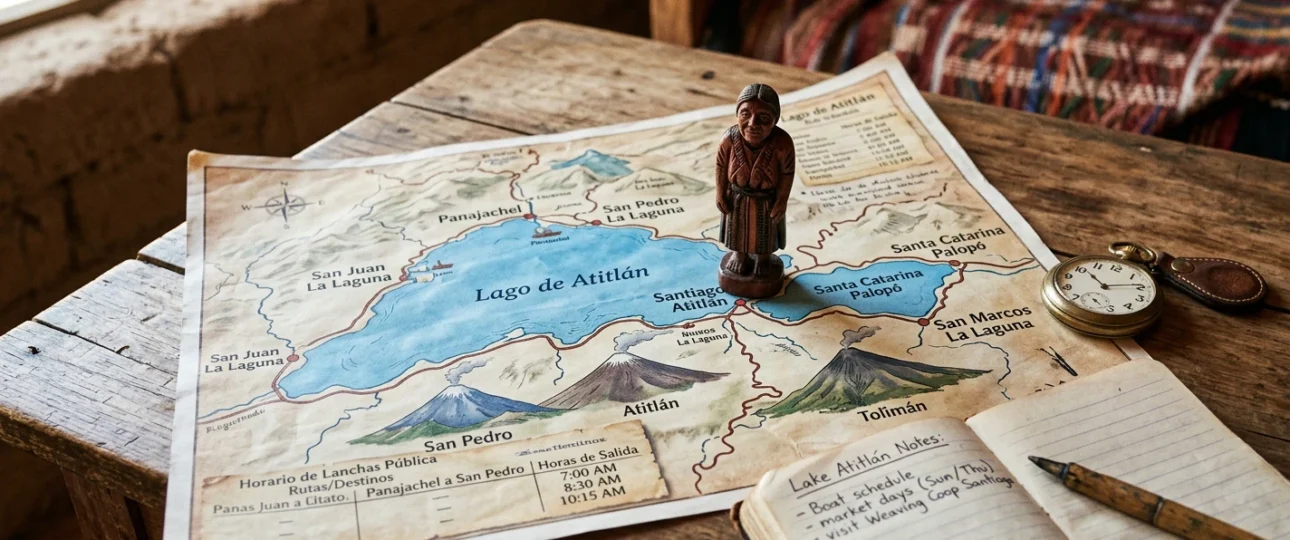
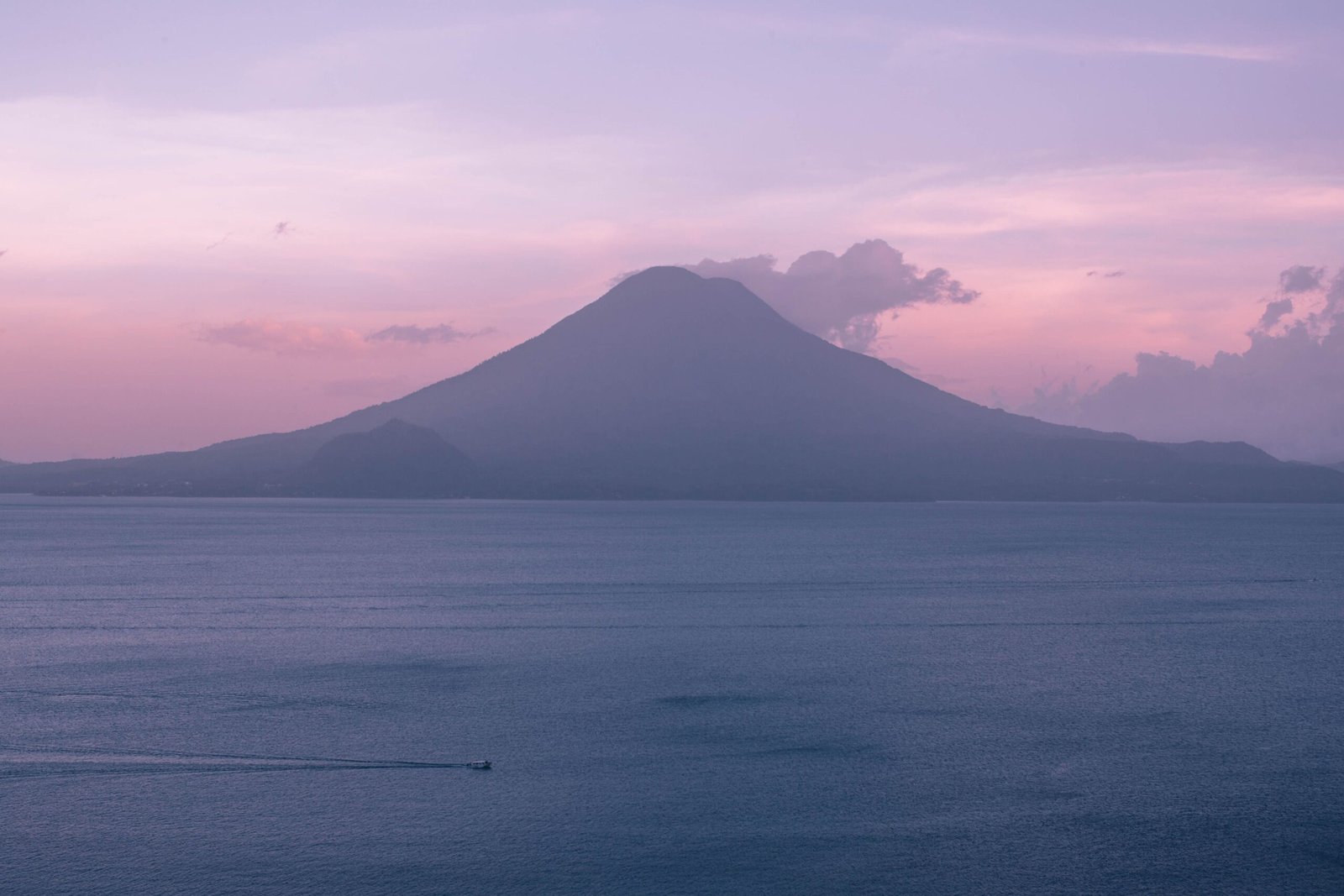
Lake Atitlan sits at 1,562 meters above sea level, which keeps the air cool and clear without pushing you into altitude sickness. It is the deepest lake in Central America, reaching roughly 340 meters, and it covers about 130 square kilometers framed by three volcanoes: Atitlán, Tolimán and San Pedro (Living Lakes Network). Twelve Maya villages ring the shore, most of them Tz'utujil and Kaqchikel communities, and no single road connects them all.
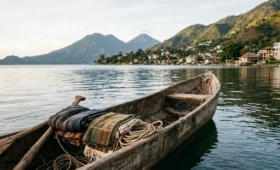
That last point shapes the entire day. The boats, called lanchas, are the main way to move between villages, so your route is really a sequence of short water crossings. A day tour works best when it treats the lake as a hub and picks two or three villages to visit well, rather than skimming all of them.
If you are still deciding when to come, the dry and rainy seasons change the water and the views, so timing your visit matters as much as the route.
A realistic one-day itinerary
Here is the rhythm we recommend for a full day starting from Panajachel, the main lakeside gateway. Travelers coming from Antigua can line up the early drive with this boat schedule for a smooth connection.
- 8:00 a.m., Panajachel dock: Meet your guide, board the lancha and head across the calm morning water. The light is best now and the lake is like glass.
- 8:30 to 10:00 a.m., San Juan La Laguna: Weaving cooperatives, natural dyes and village murals. This is the cultural heart of the day.
- 10:15 to 11:15 a.m., San Pedro La Laguna: A short hop for coffee, the lakefront and the view back toward the volcanoes.
- 11:45 a.m. to 1:30 p.m., Santiago Atitlan: The largest Tz'utujil town, with its market, church and the shrine of Maximón. Lunch here.
- 2:00 p.m., return crossing: Head back toward Panajachel before the afternoon wind builds.
The timing above is honest, not padded. Boat crossings between neighboring villages run about 20 to 30 minutes, and a satisfying village stop needs 45 to 90 minutes. Add those up and you land on three villages as the natural ceiling for one relaxed day.
How much time to spend at each stop
- San Juan La Laguna: 60 to 90 minutes. The weaving cooperatives and dye demonstrations reward a slower pace.
- San Pedro La Laguna: 45 to 60 minutes. Good for a coffee stop and photos, lighter on structured sights.
- Santiago Atitlan: 90 minutes or more, especially if you include lunch and the walk to see Maximón.
- Viewpoints and boat time: leave a buffer of 60 to 90 minutes total across the day for crossings and unhurried photo stops.
Can't-miss villages, viewpoints and cultural stops
Every traveler weighs culture, scenery and pace differently, so here is what each key stop actually offers.
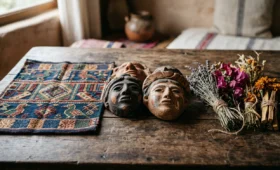
San Juan La Laguna is where living Maya craft is easiest to see up close. Women's weaving cooperatives work on backstrap looms and dye cotton with plants, bark and insects grown or gathered nearby. The painted murals and small art galleries along the main street carry that same thread of local identity. This is the one village we tell first-time visitors not to skip.
San Pedro La Laguna has an easygoing lakefront and some of the best angles back across the water to the volcanoes. It is a natural place to slow down, drink locally grown coffee and talk with your guide about the villages you have seen.
Santiago Atitlan is the largest Tz'utujil community on the lake and the most layered stop culturally. Its market, colonial church and the venerated figure of Maximón give you a fuller picture of how Maya and Catholic traditions live side by side. The boat approach alone, with Tolimán and San Pedro rising behind the town, is one of the finest views of the day.
For viewpoints, the morning crossings deliver the classic three-volcano panorama without any hiking. Travelers who want the famous sunrise ridge, often called Indian Nose or Rostro Maya above San Juan, usually treat that as a separate early-start activity rather than folding it into a village day.
Combining a boat ride with a market or weaving visit
The single best upgrade to a Lake Atitlan day tour is pairing the boat route with one hands-on cultural stop. Two combinations work especially well.
The first is the weaving route through San Juan La Laguna. You arrive by lancha, walk straight into a cooperative, and watch cotton move from raw boll to natural dye bath to finished textile on a backstrap loom. Buying directly from the women who made the piece keeps the money with the artisans, their families and the cooperative rather than a middleman.
The second is a market day. Santiago Atitlan holds a busy local market, and travelers with more time often extend the trip to Chichicastenango, home to one of the largest traditional markets in Central America, held on Thursdays and Sundays. Chichicastenango sits inland rather than on the shore, so it pairs with the lake over a longer day or a two-day plan rather than a tight single itinerary.
If the water crossings themselves are the part you are most curious about, our dedicated Lake Atitlan boat tour guide covers the lancha routes, village-to-village prices and the small practical tips that make the crossings smoother.
What to bring for the day
- Sun protection: the high-altitude light is strong even when the air feels cool.
- A light layer or windbreaker for the breezier afternoon crossing.
- Small bills in quetzales for cooperatives, lunch and the local market.
- Water and a hat; shade is limited on open boats.
- A dry bag or zip bag for your phone and camera on the lanchas.
Why a guided day tour beats going solo
Doing the lake independently in one day is possible, but it asks a lot of a first-time visitor. Public lanchas do not run on a fixed published timetable, prices are negotiated at the dock, and the villages speak Tz'utujil and K'iche' alongside Spanish. A single missed boat can collapse the afternoon half of your plan.
A guided tour removes those friction points. Our guides live in these villages, so they time the crossings around the morning calm and the afternoon Xocomil wind, introduce you inside the cooperatives and workshops, and translate both language and context so a weaving demonstration or a visit to Maximón means something rather than passing by as a photo. Because the guides, boat operators, drivers and artisans we work with are all from the lake, your day also keeps its spending inside the communities you came to see.
Guatemala welcomed millions of visitors in 2025, and the lake is one of its most visited places, which means the well-known docks and workshops can get crowded by midday. Local knowledge of quieter entry points and the right order of stops is the difference between a serene morning and a bottleneck.
Plan your day on the lake
The most useful next step is to decide on your three villages before you arrive, then build the boat timing backward from an 8 a.m. start. If you are coming from the capital first, read our guide on how to get from Guatemala City to Lake Atitlan so your travel day lines up with the morning boats.
When you are ready to turn the plan into a real day on the water, we would be glad to show you around. Join one of our Gtconnectionstravel day tours and spend the day with Maya guides who call Lake Atitlan home.
Frequently asked questions
Can you see Lake Atitlan in one day?
Yes. A well-planned Lake Atitlan day tour lets you visit two or three villages by boat, see a weaving cooperative or market, and take in the volcano viewpoints. You cannot see all twelve villages in a day, so a guide helps you choose.
Which villages are best for a one-day visit?
San Juan La Laguna for weaving and art, San Pedro La Laguna for its lively lakefront, and Santiago Atitlan for Tz'utujil culture are the most rewarding stops for a single day from Panajachel.
How early should a Lake Atitlan day tour start?
Start by 8 or 9 a.m. The lake is calm and clear in the morning, and the Xocomil wind picks up most afternoons, which makes boat crossings rougher later in the day.
Is a guided day tour worth it over going solo?
For one day, yes. A local guide coordinates lancha timing, handles Tz'utujil and K'iche' introductions, and gets you into cooperatives and workshops that are easy to miss on your own.