Key takeaways
- Santiago Atitlan is the largest Tz'utujil Maya town on Lake Atitlan and was a pre-Columbian capital known as Chuitinamit.
- Maximon is a venerated folk saint whose effigy moves to a different family's home roughly once a year, cared for by a cofradia.
- Public lanchas run from Panajachel to Santiago in about 30 to 45 minutes; pay in cash and agree the fare before boarding.
- Visitors are welcome at Maximon's shrine, but it is a living place of worship, so offerings and a small photo fee are expected.
- A local Tz'utujil guide helps you find the shrine, understand the rituals and support village families directly.
Maximon sits in a dim room in Santiago Atitlan, draped in scarves, a cigarette burning at his mouth, cared for day and night by members of a Maya brotherhood. He is a venerated folk saint, and visiting him is the reason many travelers cross the lake to this village in the first place. Santiago Atitlan is the largest Tz'utujil Maya town on Lake Atitlan, and its traditions have stayed closer to daily life here than almost anywhere else on the water.
We are a team of Maya guides who live around the lake, and Santiago, or Santiago Atitlan in full, is one of the places we most love to share. This guide explains who Maximon is, how to visit respectfully, what to look for in the weaving and markets, and how to reach the village by boat from Panajachel.
What makes Santiago Atitlan the lake's most traditional village
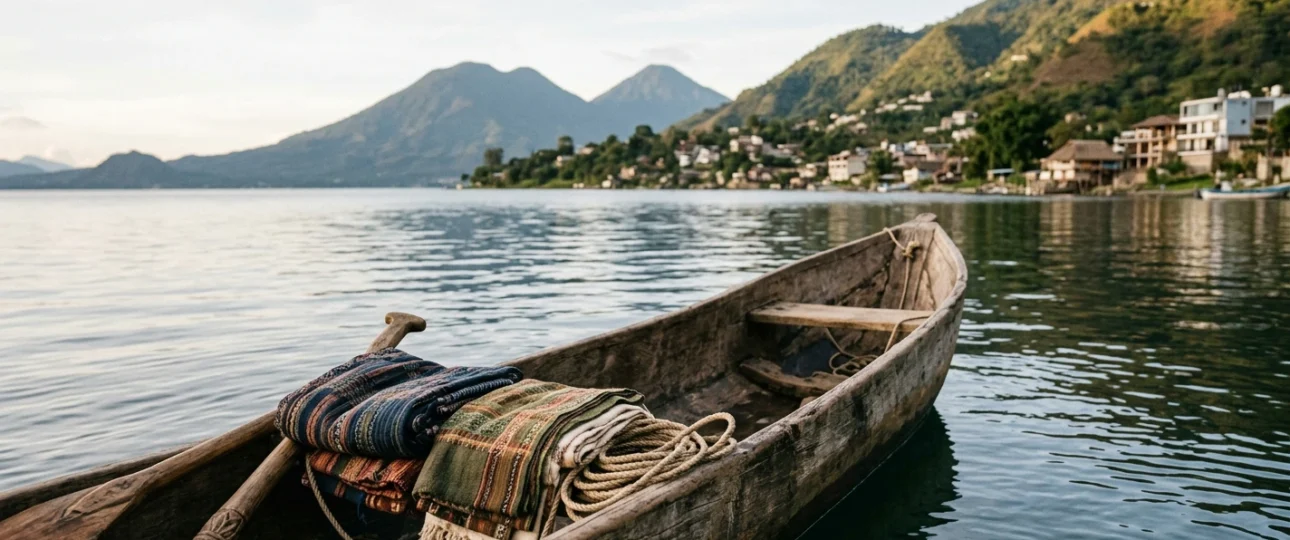
Santiago sits on the southwest shore, tucked into a bay between the Tolimán and San Pedro volcanoes. It was the capital of the Tz'utujil people in pre-Columbian times, when it was known as Chuitinamit, and that long history is still visible in daily life. Walk the streets on a market morning and you hear Tz'utujil spoken far more than Spanish.
The Tz'utujil are one of the Maya peoples of the Guatemalan highlands, with a population of roughly 100,000 living around Lake Atitlan, according to census figures summarized on Wikipedia. Santiago is their largest town, and it feels like it. Women wear the traditional huipil with its woven birds and flowers, fishermen still work the bay in narrow wooden cayucos, and the rhythms of the cofradías, the religious brotherhoods, shape the calendar.
For travelers, that means Santiago rewards a slower pace. It is a place to watch, to ask questions and to buy directly from the people who make things, rather than to tick off a sight and leave.
Visiting Maximon, the folk saint, respectfully
Maximon, also called Rilaj Mam, which means Grandfather, and San Simón, is a Maya folk saint unlike anything in a church. He is a syncretic figure, blending an older Maya deity with Catholic imagery, and the people of Santiago treat him as both trickster and protector. His effigy is a wooden figure wrapped in layers of colorful scarves, propped on a straw mat and tended by cofrades who sit with him through the day.
What surprises most first-time visitors is that Maximon does not live in a temple. His effigy resides in a different family's home roughly once a year, and during Holy Week he is paraded through the streets before being placed in a new host home, as National Geographic reports in its feature on the tradition. Hosting him for the year is considered a high honor. His offerings are earthy and human: moonshine, hand-rolled cigarettes and money, left by pilgrims asking for help with love, money or protection.
A few practical notes for a respectful visit:
- Find the current house first. Because Maximon moves, the location changes. A guide or any resident can point you there.
- Bring a small offering or cash donation. This supports the family and cofradía caring for him.
- Expect a photo fee. Taking pictures of the effigy usually costs a few quetzales, and you should always ask before photographing people.
- Keep your voice low. This is a working place of worship, not a performance staged for visitors.
Go with curiosity rather than a checklist, and the shrine opens up as one of the most moving things you can experience on the lake.
Tz'utujil weaving, art and local markets
Santiago is known for its backstrap weaving, the technique in which a loom is tied to the weaver's waist and a fixed post. The patterns here carry meaning, with birds and plants that connect to Tz'utujil stories and the land around the lake. Buying a textile directly from the woman who wove it is one of the most honest exchanges a traveler can make.
The town is also a center for naif painting, a flat, vivid style that depicts village life, planting, fishing, markets and festivals. Small galleries and family studios sit along the main road up from the dock, and many artists are happy to explain a piece if you take the time to ask.
When you browse, keep these points in mind:
- Market days bring the most to see. Fridays and Sundays are especially busy, with produce, textiles and everyday goods.
- Prices are in quetzales and often negotiable, but bargain gently. A fair price keeps a family working.
- Look for the maker's hand. Ask who wove or painted a piece; the answer tells you whether your money stays in the village.
How to reach Santiago by boat from Panajachel
The lake sits high in the highlands, at roughly 1,562 meters above sea level, and the easiest way across is the public lancha. In Panajachel, Santiago uses its own dock, separate from the boats that run the north shore circuit to San Pedro and San Marcos, so confirm you are at the right one.
Here is what to expect on the crossing:
- Travel time: about 30 to 45 minutes, depending on the boat and the wind.
- Fare: a few US dollars each way, paid in cash. Agree the price before you step aboard, as visitors are sometimes quoted more.
- Schedule: lanchas leave when they fill rather than on a fixed timetable, so there is usually only a short wait at the main docks.
- What to bring: small bills, sun protection, water and a light layer, since the open water can be breezy and the glare is strong.
If you are planning the wider trip, our guide to the Lake Atitlan boat tour, villages, prices and tips covers how the dock-to-dock routes connect. The boat ride itself is part of the pleasure, with the volcanoes rising on every side as you approach the bay.
Why to visit with a local Maya guide
Maximon moves house, the weaving carries stories outsiders rarely catch, and the cofradías run on relationships built over generations. A guide from Santiago turns a confusing morning into a welcome. At Connections Guatemala Travel, our guides are Tz'utujil and Kaqchikel people who live on the lake, and we work directly with boat operators, drivers, artisans and the families who host Maximon, so your visit supports the community rather than passing it by.
A local guide helps you in concrete ways:
- Finds Maximon's current home and explains the etiquette before you walk in.
- Translates between Tz'utujil, Spanish and English, so you can actually talk with weavers and painters.
- Keeps the exchange fair, agreeing boat fares and introducing you to makers whose work is genuine.
- Shares the meaning behind what you see, from the symbols in a huipil to the role of the cofradías.
If you want to see how Santiago fits into a wider day, we can show you how the villages link together across the water.
Santiago rewards travelers who come to listen. Spend a morning with Maximon, buy a textile from the woman who wove it, and let a guide from the village carry the story. When you are ready to visit, reach out to us at Connections Guatemala Travel and we will plan a boat crossing and a respectful visit that puts you in the hands of the people who call this lake home.
Frequently asked questions
Where is Maximon in Santiago Atitlan right now?
The effigy lives in the home of a different cofradia family and moves roughly once a year, so the location changes. Local guides and residents always know the current house.
Can tourists visit Maximon?
Yes. The shrine welcomes visitors, pilgrims and shamans. Bring a small offering or cash donation, and expect a modest fee to take photographs.
How do I get from Panajachel to Santiago Atitlan?
Take a public lancha from the Santiago dock in Panajachel. The crossing takes about 30 to 45 minutes and costs a few dollars, paid in cash.
What language do people speak in Santiago Atitlan?
Most residents speak Tz'utujil, one of the Maya languages, as their mother tongue, along with Spanish.
What should I bring when visiting Santiago Atitlan?
Cash in small bills, sun protection, water, a light layer for the boat ride and respect for a working place of worship when you visit Maximon.